Woven vs Knit Fabric: Which Should You Use for Your Apparel Line?
One of the most fundamental decisions in apparel design is choosing between woven and knit fabric constructions. It is also one of the most misunderstood. I regularly talk to brand owners who are surprised to learn that their t-shirts are made from knit fabric while their dress shirts are woven. Both look like "fabric" to the untrained eye, but they behave completely differently and require different manufacturing approaches.
Getting this decision wrong is an expensive mistake. A stretchy garment that needs to move with the body does not work in a woven without building in specific design solutions. A structured garment that needs to hold its shape will not work in a jersey knit. Understanding the fundamentals here will make you a better designer and a better client for your manufacturer.
How Woven and Knit Fabrics Are Constructed
The difference between woven and knit is in how the fibers are assembled into fabric.
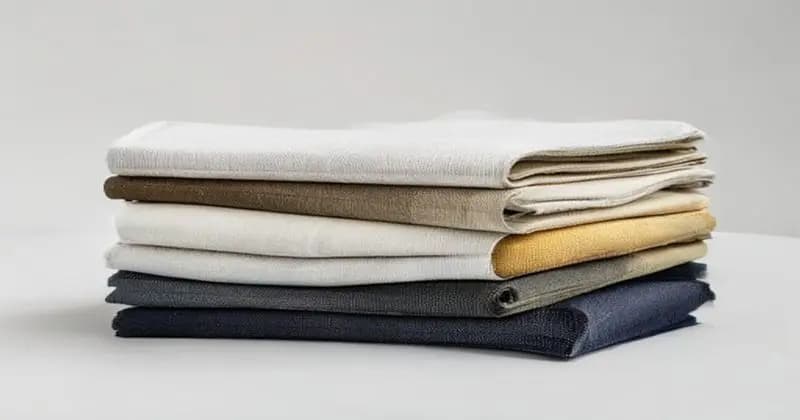
Woven fabrics are made by interlacing two sets of yarns at right angles: the warp (running lengthwise on the loom) and the weft (running crosswise). This over-under interlacing creates a stable, structured fabric. Think denim, canvas, twill, Oxford cloth, silk, chiffon, and most traditional shirting fabrics — all woven.
Knit fabrics are made from a single yarn (or set of yarns) that form interlocking loops. The loops give the fabric inherent stretch and recovery. Think t-shirt jersey, French terry, spandex activewear, sweater knits. All knit constructions.
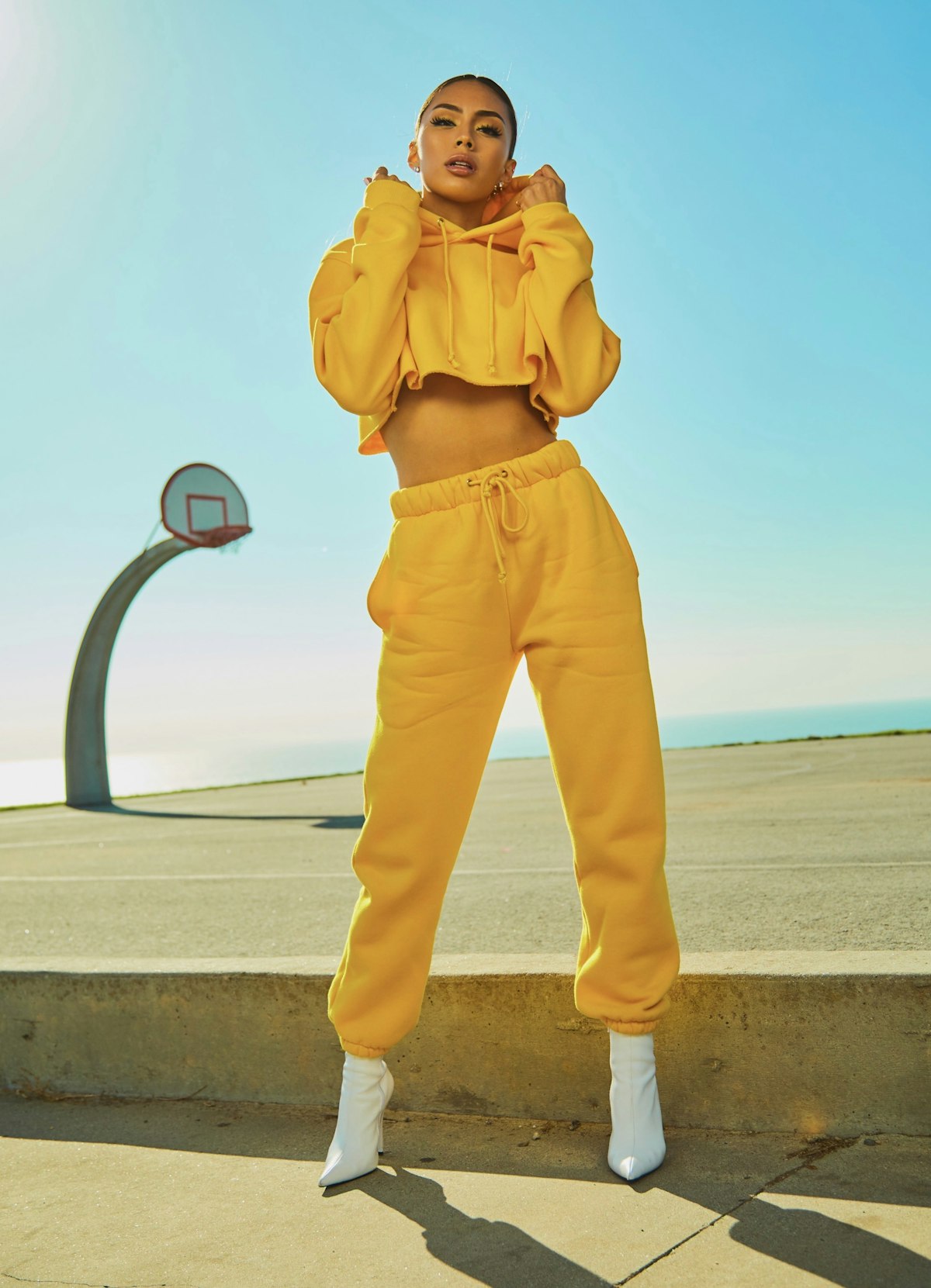
Visually, you can often distinguish them: woven fabrics have a regular grid-like structure when held up to light, while knit fabrics show the characteristic loop structure and tend to curl at the edges when cut.!Custom hoodie manufacturing uses fleece knit fabric for stretch and comfort
Key Properties of Woven Fabrics
Stability: The interlaced construction creates a stable, dimensionally consistent fabric. Wovens hold their shape, don't stretch significantly in any direction (unless woven with elastic yarns), and maintain a crisp structure.
Structure: Wovens have a defined face and back. They drape differently depending on weight and fiber content. Structured garments — dress shirts, blazers, pants, jackets, shorts, are almost always woven.
Limited stretch: On the grain (the warp and weft directions), wovens have minimal stretch. The bias direction (45 degrees to the grain) has more give, which is why bias-cut garments drape more fluidly. Adding spandex or lycra yarns to a woven can add stretch, creating "stretch wovens" used in performance chiNos and stretch athletic shorts.
Fraying edges: Cut edges of woven fabrics will fray unless finished — seam allowances need to be serged, bound, or French-seamed. This is a manufacturing consideration that adds steps compared to knit.
Examples: Dress shirts, shorts, pants, blazers, bomber jackets, denim, chiNo trousers, most traditional tailored clothing, structured bags.
Key Properties of Knit Fabrics
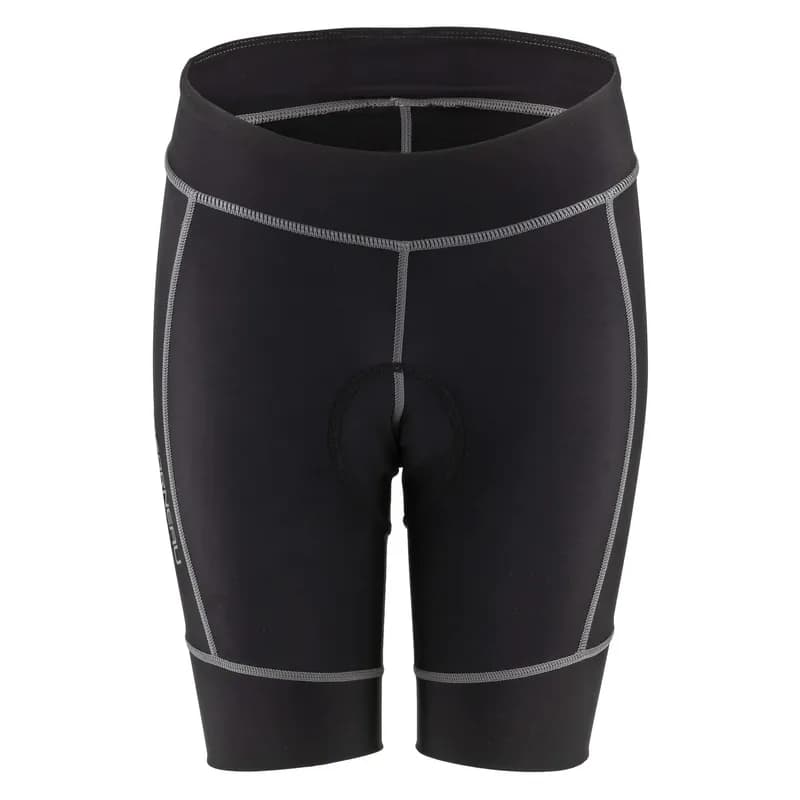
Inherent stretch: The loop construction of knit fabric gives it natural stretch in at least one direction. Single jersey stretches primarily in the width. Double knit and interlock stretch in both directions. Spandex-blend knits (4-way stretch) extend in all directions and recover quickly.
Comfort: The stretch and soft drape of knit fabrics make them inherently more comfortable for close-fitting garments. This is why all activewear, most casualwear, and all underwear are knit.
No fraying: Knit fabric does not fray when cut (the loops hold together). This simplifies edge finishing in manufacturing. However, cut edges will curl: another characteristic to account for in construction.
Recovery: Quality knit fabrics, especially those with spandex content, return to their original dimensions after stretching. This recovery property is what makes a well-fitting t-shirt maintain its shape after years of wearing and washing.
Runs: If a single loop in a knit fabric breaks, it can cause a run (a ladder of broken loops) in certain constructions. Single jersey is more vulnerable to this than double-knit or interlock constructions.
Examples: T-shirts, hoodies, sweatshirts, activewear, gym leggings, sportswear, underwear, socks, most knitwear.!Fitness apparel always uses knit fabrics for stretch performance and comfort
Making the Decision for Your Product
The decision is usually straightforward once you know the properties:
**Use woven fabric for:**
**Use knit fabric for:**
Stretch Wovens: The Middle Ground
one category worth knowing about is stretch woven fabrics. Woven constructions with elastic (spandex) yarns incorporated into the weave. This creates a fabric with the structure and appearance of a woven but with added stretch.
Stretch wovens are used in:
Stretch wovens are typically more expensive than equivalent Standard wovens or knits, and they require more careful handling in manufacturing to avoid twisting or distorting the stretch direction.
Manufacturing Implications
The fabric choice affects how the garment is manufactured:
Knit fabrics require a serger (overlock machine) as the primary seam-making tool, the seam needs to accommodate stretch. Wovens are typically sewn on a Standard lockstitch machine with a serger for seam edge finishing.
For activewear, flatlock seams are used for knit fabrics. Flatlock machines are knitting-specialized equipment. This is a reason why activewear manufacturers are distinct from woven garment manufacturers.
Pattern cutting is different too — knit patterns are designed with less ease than woven patterns because the fabric stretches to fit the body. A woven pattern has ease built in because the fabric does not stretch.
At Mughal Apparel, we have the equipment and expertise to work with both woven and knit constructions across our full product range. Whether you are developing activewear in performance knits or structured shorts in stretch woven, we can produce it. View all products to see what we make, then get a free quote. MOQ is 50 pieces and we respond within 24 hours.
About the Author
Salman AhmadManaging Director
Salman leads Mughal Apparel's strategy and global client relationships. 17+ years in apparel manufacturing, based in Daska, Sialkot District.
Meet the full team →Tags:
Ready to Start Manufacturing?
Get a free quote from Mughal Apparel. MOQ 50 pieces. Response within 24 hours.
Get Free Quote