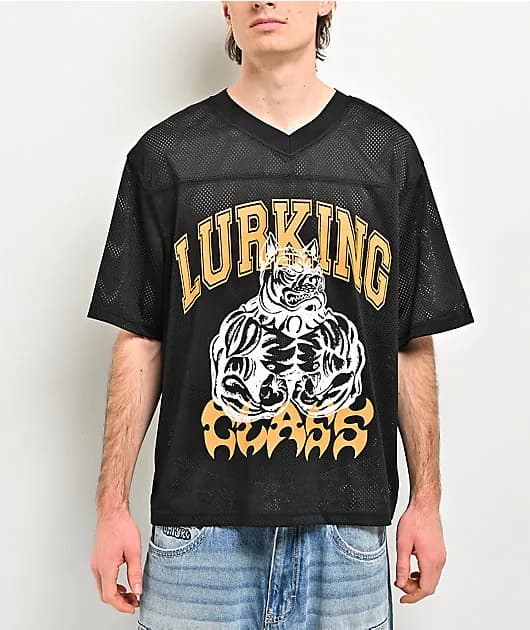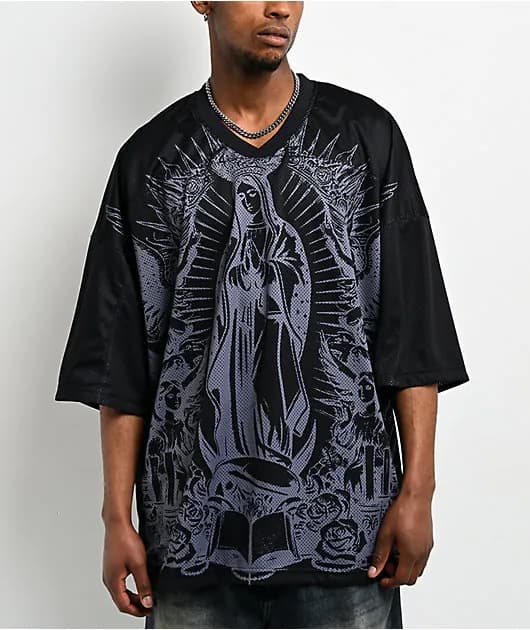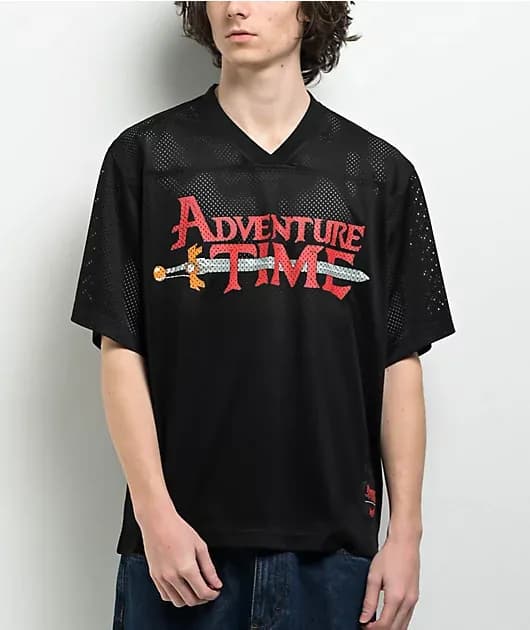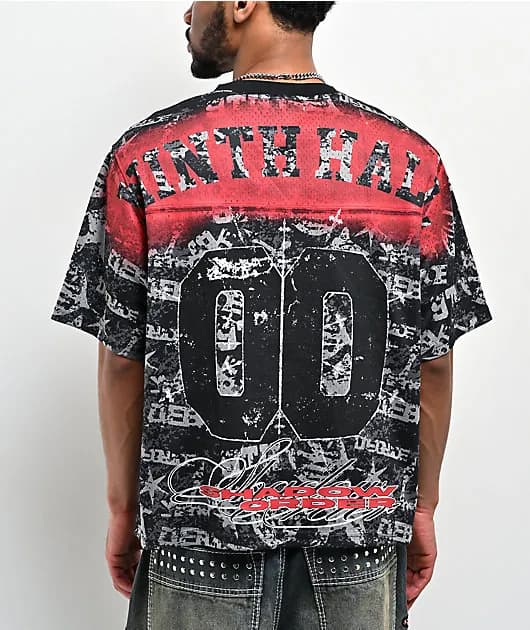
Updated May 2026: Dye-sublimation is the dominant printing technology for football fan jerseys globally. This guide explains the production process, fabric requirements, design implications, and cost economics.
Sublimation Football Jersey Manufacturing: A Complete Production Guide
Dye-sublimation is the dominant decoration technology for football fan jerseys. Over 95% of fan jerseys produced for global tournaments use sublimation — including every official kit you've seen in the last 25 years. This guide is the technical reference for B2B buyers and brand owners sourcing sublimated football jerseys.
We cover: what sublimation actually does (chemistry + physics), why it must be polyester, the production process step-by-step, design implications, cost structure, and how sublimation compares to alternatives.

What dye-sublimation actually does
Dye-sublimation is a specialised printing technology that bonds dye molecules into polyester fabric at the molecular level, rather than depositing ink on top of fabric like screen print or DTG.
The process:
1. The design is printed onto transfer paper using sublimation dye (special dye that converts directly from solid to gas under heat).
2. The transfer paper is laid onto raw polyester fabric (or a polyester garment panel before sewing).
3. A heat press at 200°C / 392°F for 30–45 seconds vaporises the dye.
4. Under heat and pressure, the dye gas penetrates the polyester fibres and chemically bonds with the polymer.
5. The dye becomes part of the fibre itself — not a coating on top.
The result: the print is permanent, has zero hand-feel (you can't feel the ink), maintains full breathability of the underlying fabric, and survives unlimited wash cycles.
Why sublimation must be polyester
Sublimation is a polyester-only technology. Here's why:
For full-colour, vibrant football fan jerseys, 100% polyester interlock at 140-180 GSM is the standard.
The sublimation production process — step by step
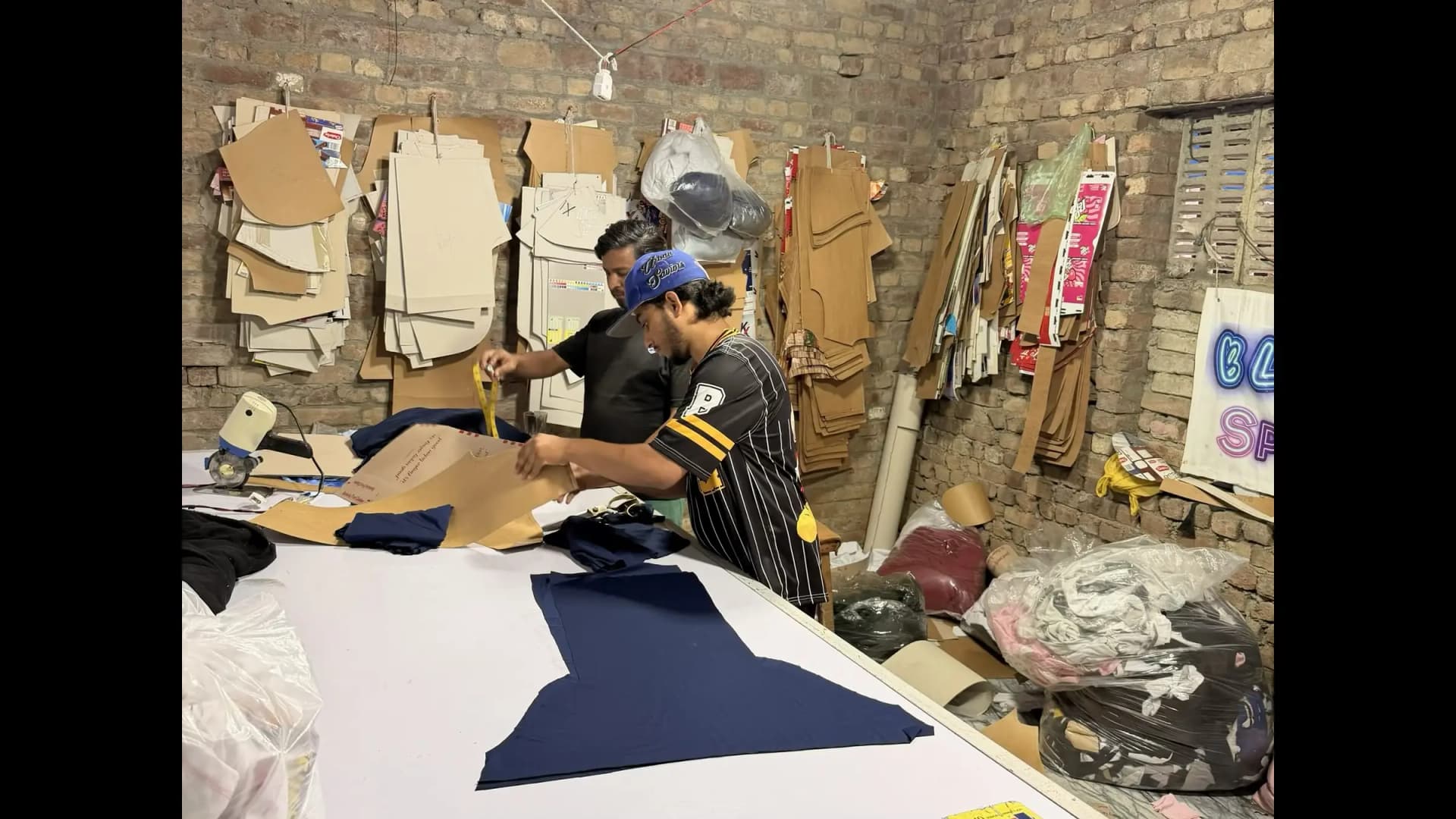
Here's exactly how a sublimation football jersey is produced at our Daska facility:
Step 1: Design + tech pack (Day 1–5)
The buyer supplies design artwork (vector preferred — AI, EPS, PDF) plus tech pack with measurements, fabric weight, and colour references. Our team converts this into production-ready specifications.
Step 2: Digital design layout (Day 5–7)
Our design team lays out the print across the jersey panels — front, back, sleeves, side panels — accounting for seams, bartacks, and how panels are cut from fabric rolls. Marker layout optimisation: 1m of fabric produces 1.6 jerseys on average.
Step 3: Transfer paper printing (Day 7–10)
The complete jersey design is printed onto sublimation transfer paper using sublimation dye inkjet printers. Top-quality printers run at 720 dpi resolution and 5–10 metres per minute.
Step 4: Heat-press transfer (Day 10–13)
The transfer paper is laid onto raw polyester fabric and pressed at 200°C for 30–45 seconds. The dye sublimates into the fabric.
Step 5: Pattern cutting (Day 13–17)
Sublimated fabric panels are die-cut or laser-cut into garment pattern pieces. Our facility uses Gerber-compatible CAD patterns.
Step 6: Sewing assembly (Day 17–25)
Cut panels are sewn into finished jerseys. Standard construction includes:
Step 7: Quality inspection (Day 25–28)
AQL 2.5 inspection covering:
Step 8: Finishing + packaging (Day 28–32)
Iron, fold, polybag, hangtag, master carton, export documentation.
Design implications of sublimation
Sublimation enables design possibilities other printing methods can't match:
Design considerations:
Cost structure of sublimation
Sublimation pricing scales differently from screen print or embroidery:
Sublimation vs alternatives — cost comparison
| Method | Per-garment cost (1,000 pcs) | Setup cost | Best for |
|---|---|---|---|
| **Sublimation** | Included in FOB | $0 (no screens) | Full-coverage graphics, low MOQ |
| **Screen print** | $0.85–1.80 per impression × multiple colours | $35–50 per screen | High-volume single-colour designs |
| **Embroidery** | $0.36–2.40 per logo | $20–40 digitisation | Premium patches, badges |
| **DTG** | $4–9 per garment | $0 | Photo-realistic on cotton (not jersey use case) |
| **Heat transfer vinyl** | $0.80–1.80 per element | $0 | Per-order custom names/numbers |
Sublimation quality benchmarks
What separates excellent sublimation from mediocre sublimation:
We maintain these benchmarks across all sublimation production at our Daska facility.
When NOT to use sublimation
Sublimation is the default choice for full-graphic football jerseys, but not always optimal:
Frequently asked questions
**Q1: Can sublimation print on cotton?**
Not effectively. Sublimation dye doesn't bond with cellulose fibres (cotton). The result is dull and non-permanent. For cotton jerseys, use water-based or discharge screen print instead.
**Q2: How long does sublimation last on a polyester jersey?**
Permanent. The dye becomes part of the polyester fibre at the molecular level. Sublimation prints maintain colour fastness through unlimited wash cycles, regular ironing, and intense sunlight exposure.
**Q3: What's the minimum order for sublimated jerseys?**
50–100 pieces per design per colourway at our Daska facility. Sublimation makes low-MOQ economically feasible because there are no per-design setup costs.
**Q4: Can sublimation match Pantone colours exactly?**
Yes, within ΔE 2.5 tolerance — the textile industry standard. We provide pre-bulk colour samples for buyer approval before production.
**Q5: How does sublimation compare to DTG?**
DTG (Direct-to-Garment) prints onto cotton fabric using water-based inks, producing photo-realistic results but with a hand-feel and limited wash durability. Sublimation prints onto polyester with no hand-feel and unlimited durability. They're different technologies for different fabric types — DTG for cotton, sublimation for polyester. Most fan jerseys use polyester, so sublimation wins.
Related sourcing guides
Get a quote within 24 hours → · WhatsApp our team → · Take the factory tour →
About the Author
Salman AhmadManaging Director
Salman leads Mughal Apparel's strategy and global client relationships. 17+ years in apparel manufacturing, based in Daska, Sialkot District.
Meet the full team →Tags:
Ready to Start Manufacturing?
Get a free quote from Mughal Apparel. MOQ 50 pieces. Response within 24 hours.
Get Free Quote