How to Build an Apparel Brand in 2025: Strategy, Manufacturing, and Growth
More people are starting clothing brands today than at any point in history. Lower barriers to entry: print-on-demand services, social commerce, Shopify stores you can launch in a weekend. Have democratized the ability to put a brand into market. That's exciting and genuinely true.
But here's what's also true: the failure rate is brutal. Most clothing brands that launch don't survive their second year. Not because the founders lacked passion or creativity, but because they didn't understand the buSiness they were actually entering.
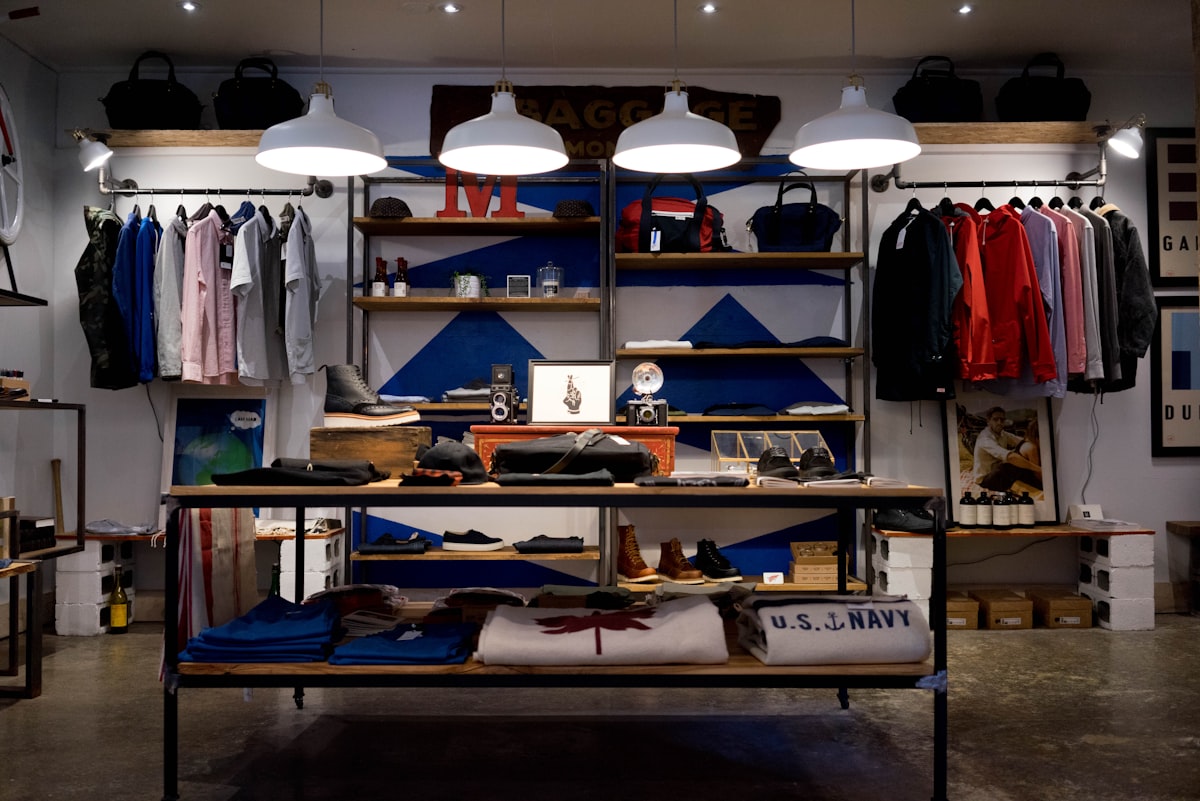
I've worked with enough brand founders, at every stage from concept to scale (to have a clear view of what separates the brands that make it from the Ones that don't). This guide is the honest version of what you need to know.!Fashion brand startup development
Start With the BuSiness, Not the Product
The biggest mistake I see new apparel founders make is treating brand building as a creative exercise and neglecting the buSiness fundamentals until they become impossible to ignore.
Your product might be beautiful. Your photography might be stunning. Your social media might generate real engagement. NOne of that matters if you don't have viable unit economics — the financial relationship between what it costs to make and sell something and what you charge for it.
**The unit economics equation for apparel:**
Landed cost (manufacturing + freight + duties) should be 25-30% of your retail price maximum. Ideally 20-25%.
If a t-shirt costs you $8 landed and you sell it for $25, that's a 32% cost ratio and thin but workable if your marketing costs are well-controlled.
If that same t-shirt costs $8 landed but you're selling it for $18 to compete on price, you've a math problem that no amount of great branding will solve.
Work out your unit economics first. Then design your product to fit within them.
Finding Your Specific Position
The apparel market is extraordinarily competitive. There are 500 minimalist basics brands, 300 sustainable streetwear brands, 200 athletic brands with bold colorblocking. The question isn't "can I make a good product" — it's "why would anyone choose mine over the established alternatives?"
Positioning clarity means being able to answer these questions without hesitation:
Weak positioning: "We make high-quality basics for the modern woman."
Strong positioning: "We make professional-grade performance basics for women who work out at 6am and then go straight to the office, garments that transition between both environments without compromise."
The second version identifies a specific customer, a specific context, and a specific functional proposition. It makes targeting, product development, and marketing decisions much clearer.
The Product Line Decision
one of the most common early mistakes: launching with too many products.
Every SKU you add multiplies your complexity. More inventory to manage, more capital tied up in stock, more content to create, more customer service to handle. A brand that launches with 20 items and sells 10 units of each is in a much worse position than a brand that launches with 5 items and sells 40 units of each.
**The case for starting narrow:**
Launch with 3-5 hero products in 2-3 colorways. Add based on demand signals, not based on "what would complete the range."
Product Development Timeline
Month 1-2: Concept and specification
Month 3-4: Sampling
Month 5: Pre-production sample approval
Month 6-7: Production
Month 8: Goods arrive, launch preparation
Month 9: Launch
This is a realistic 9-month timeline from concept to market for a properly developed product line. Brands that try to compress this to 4-5 months typically pay for it in quality issues and fit problems.!Fashion supply chain and apparel production
Manufacturing: Your Most Important Partnership
Your manufacturer is not a vendor. They're a partner in your brand. Their quality, communication, and reliability directly determine your customer experience.
**What to look for in a manufacturing partner:**
Experience in your product category. A factory that's excellent at cotton t-shirts may have no competence in technical activewear. Match the manufacturer to the product.
Sample quality. The samples tell you everything about a factory's interpretation of technical specifications, their attention to detail, and their quality consciousness. A factory that delivers excellent first samples is rare and valuable.
Communication. You need a manufacturing partner you can actually communicate with: ideally in your language, with reliable response times. Communication problems multiply in production.
Compliance and transparency. Increasingly, brands need to be able to answer questions about their manufacturing conditions. A factory that won't provide audits or answer questions about labor practices is a brand risk.
Realistic lead times. Any factory that quotes you shorter lead times than the production complexity warrants is telling you what you want to hear. Work with partners who give you honest timelines.
Our approach: We work with brands from initial tech pack through pre-production sampling to production, maintaining clear communication throughout. Our how to start a clothing brand article covers the development process in more detail.
Building the Brand: Beyond the Product
The product is the foundation. But brands are built in the space between the product and the customer.
Brand identity. Name, visual identity, tOne of voice. These need to be cohesive and genuinely differentiated. Not "premium" as a vague aspiration, but specifically premium in a way that means something to your specific customer.
Content and in 2025, a clothing brand without a content strategy is essentially invisible. But good content isn't just product photography (though that matters). It's storytelling, community, the life context your product lives in.
Distribution channel choice. DTC Shopify, wholesale to retailers, marketplace (Amazon, Zalando), or some combination. Each channel has different margin implications, customer ownership implications, and operational requirements. Start focused before expanding channels.
Community building, the brands that retain customers and grow through word-of-mouth invest in community. That could be a private customer group, in-person events, a loyalty program, or simply excellent customer service that makes people feel valued.
Scaling: When and How
Scaling too fast kills as many apparel brands as scaling too slow. The temptation to pour revenue back into inventory and production before the brand-market fit is proven is real and frequently fatal.
Signals that you're ready to scale:
Scaling before these signals is usually a gamble that doesn't pay off.
We've worked with brands at every stage of this journey. For new brands: we start from 50 pieces MOQ, and we can help you develop your first collection with the construction quality and material specification that builds a real foundation. Get a free quote and tell us where you are in the process, we respond within 24 hours.
About the Author
QC TeamQuality Control Department
Mughal Apparel's quality inspectors — AQL 2.5 trained, ISO 9001 certified, 8+ years average experience.
Meet the full team →Tags:
Ready to Start Manufacturing?
Get a free quote from Mughal Apparel. MOQ 50 pieces. Response within 24 hours.
Get Free Quote