<p>Quick context: I run Mughal Apparel out of Daska, Sialkot District. We've been making custom swimwear manufacturing: from board shorts to competition suits for global brands for 17 years. This article isn't a hypothesis or a theory; it's the playbook we actually use.</p># Custom Swimwear Manufacturing: From Board Shorts to Competition Suits
Swimsuits are deceptively simple products. You look at a pair of board shorts or a one-piece suit and it doesn't seem complicated and but get the fabric wrong, the construction wrong, or the finishing wrong, and you'll know about it fast. Chlorine resistance, UV protection, colorfastness in saltwater, elastic that doesn't go limp after twenty washes — these aren't nice-to-haves. They're the baseline expectation of any customer who buys swimwear.
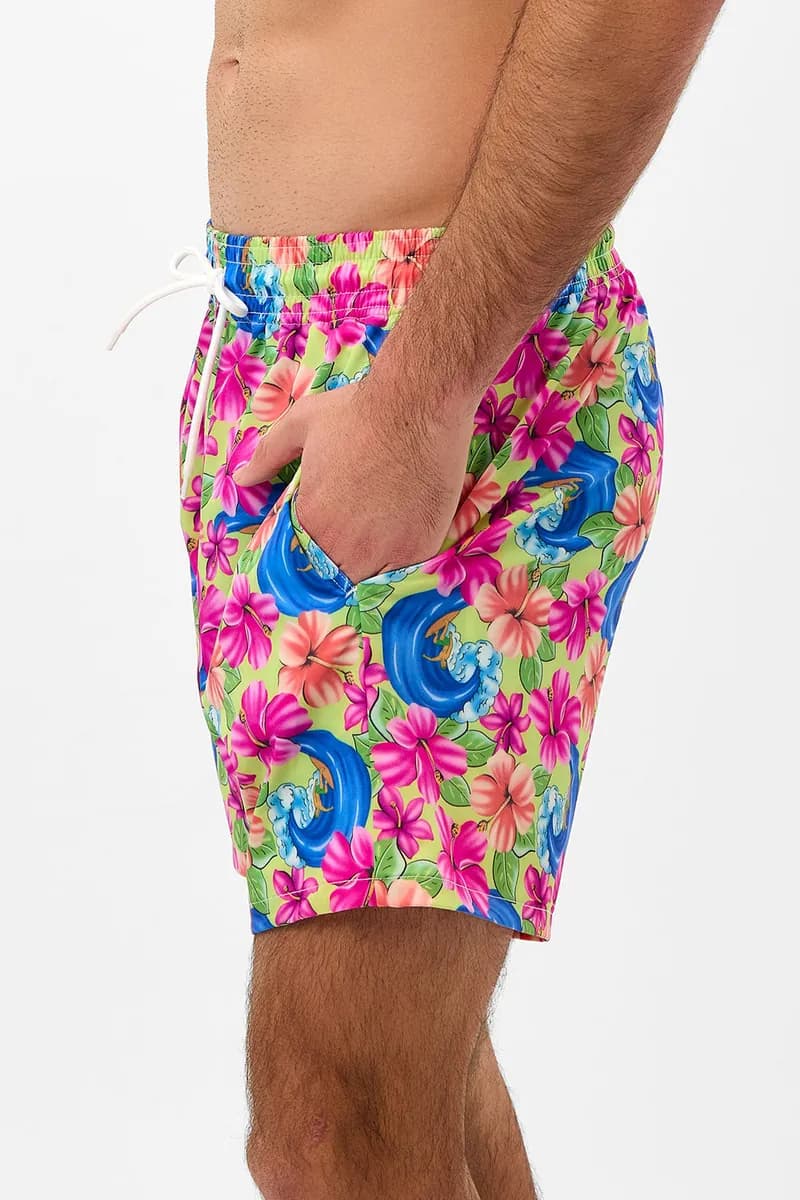
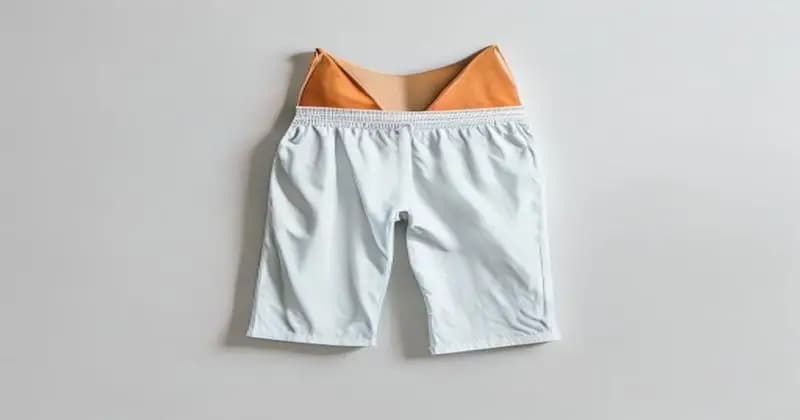
I've worked with clients launching everything from fashion beach brands to competitive swimming programs, and the requirements are completely different. This guide covers the full range so you can figure out where your product sits and what you need to manufacture it right.!Custom swim shorts product sample
The Swimwear Market: Where Does Your Product Fit?
Before diving into manufacturing specifics, it's worth being clear about which segment you're targeting. The swimwear market breaks down roughly into three segments, each with different manufacturing priorities:
Lifestyle and Beachwear, board shorts, bikinis, cover-ups, casual rash guards. This segment prioritizes aesthetics, print quality, and comfort. Performance is secondary. Your customer is wearing this on the beach, not in the pool.
Performance and Competitive Swimwear — racing suits, training one-pieces and jammers, technical suits. Chlorine resistance, compression, and hydrodynamics matter here. The fabrics are technical, the construction is precise, and the margins are higher.
Hybrid and Active Swim. Surf-oriented gear, triathlon wear, open-water swimming. Products that need to perform in and out of the water, handle UV exposure, and survive extended saltwater use.
Knowing which segment you're in tells you immediately what fabrics you need, what construction Standards apply, and what your price point can support.
Fabric: The Most Critical Decision in Swimwear
Swimwear fabrics are a specialized category, and cutting corners here is where brands make their most expensive mistakes.
Nylon/Lycra (Spandex) blends are the traditional swimwear Standard. A typical composition is 80% nylon, 20% Lycra. The nylon provides strength and durability; the Lycra provides stretch and recovery. This combination handles chlorine reasonably well and maintains its shape through repeated use.
Polyester/Spandex blends have become the preferred choice for performance and competitive swimwear. Polyester has significantly better chlorine resistance than nylon (in competitive swimming environments where athletes train daily in chlorinated pools), this matters enormously. The trade-off is that polyester has a slightly different hand feel and less natural luster.
PBT (Polybutylene Terephthalate) is what the serious competitive brands use. It offers exceptional chlorine resistance and shape retention. It's more expensive and requires specific handling in production.
For lifestyle beachwear, a recycled polyester option is increasingly popular, brands are using fabrics made from reclaimed ocean plastic or recycled PET bottles. The environmental story resonates with consumers, and the fabric quality is genuinely good.
What to avoid: cheap polyester blends with minimal spandex content. They look fine in the first season but lose their shape and colorfastness quickly. Nothing destroys a swimwear brand's reputation faster than products that fade and sag.!Sublimation printing for swimwear graphics
Printing and Colors: Getting Swimwear Graphics Right
Swimwear printing isn't like printing a t-shirt. The fabric is stretch, which means any print needs to stretch with it without cracking, fading, or distorting.
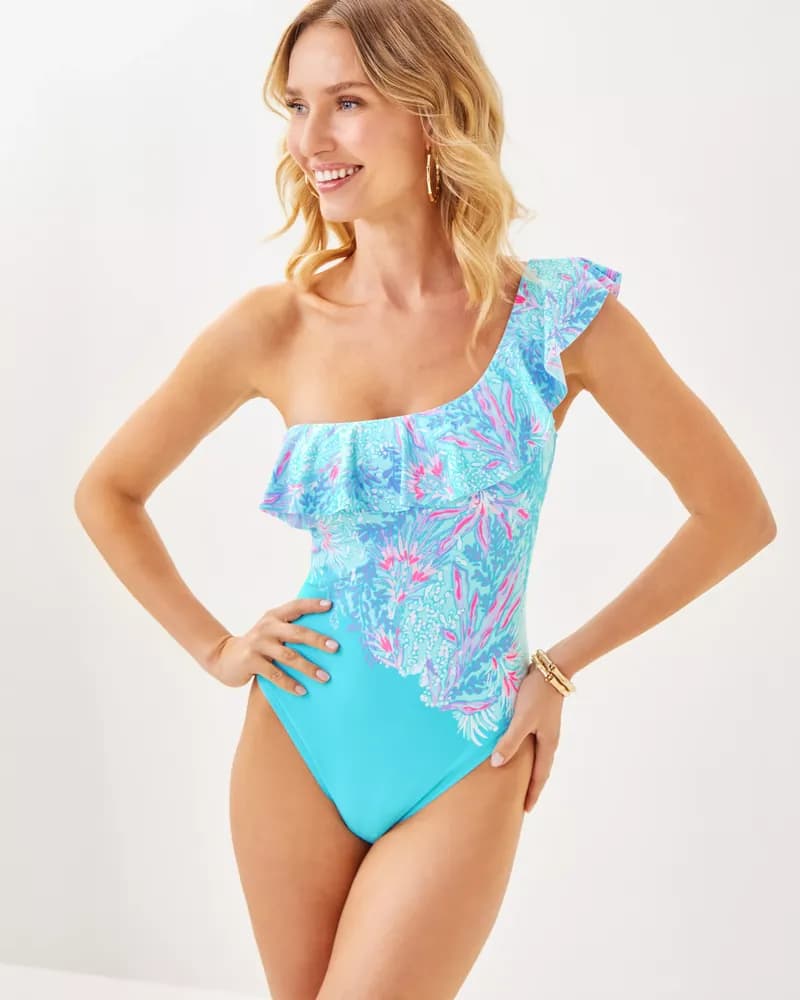
Sublimation printing is the dominant technology for polyester swimwear. The dye is transferred under heat and pressure into the fabric fibers themselves rather than sitting on top, which means it stretches with the fabric, doesn't crack, and has excellent resistance to chlorine and UV fading. This is what you want for any all-over print swimwear.
Knitted-in patterns, like jacquard weaves. Give a premium look on structured swimwear but require more complex manufacturing and higher MOQs.
PMS color matching is important for brand consistency. Swimwear colors shift in chlorine and sunlight, so test your prints under those conditions during sampling, not just on a light box.
One common mistake: ordering printed swimwear without testing the print on a stretch sample. What looks great laid flat can look completely different when the fabric is stretched to body shape. Always get a stretch test on your print samples.
Construction Specifics for Swimwear
Swimwear construction has its own set of rules, and factories that don't specialize in it make predictable mistakes.
Flatlock stitching is Standard for most swimwear seams. It creates a flat, smooth seam that doesn't rub or dig in and looks clean from both sides. Regular overlock stitching has no place in quality swimwear.
Elastic and the elastic used in swimwear must be chlorine-resistant. Regular rubber elastic degrades rapidly in pool environments. Specify latex-free, chlorine-resistant elastic at every waistband and leg opening.
Lining — women's swimwear typically requires a nylon/spandex lining in the gusset area for modesty and comfort. Men's board shorts often use a mesh liner. The lining fabric needs to be as technically specified as the outer fabric — cheap lining in an otherwise good swimsuit is immediately noticeable.
Drawcords and hardware (for board shorts), drawcords should be sealed at the ends to prevent fraying, and any metal hardware should be coated or specified as non-corrosive. Rusted hardware on a swimwear product is a catastrophic quality failure.
Board Shorts Specifically
Board shorts are the highest-volume product in men's swimwear, and they have their own construction considerations.
Length matters (16-20 inches is the current mainstream range for men's boardshorts). Anything longer starts to feel dated; anything shorter moves toward swim brief territory.
Pocket construction for board shorts needs to drain quickly. Mesh pockets or drainage grommets are Standard. Cargo pockets with sealed velcro or snaps are popular in the surf segment.
Outseam detailing and side seams on board shorts are often the design feature, with color-contrast stitching, woven labels, or decorative tape.
For competition swim shorts and jammers, drag is a real concern. Every seam, every pocket, every detail adds friction in the water. Competitive products minimize these details intentionally.
What to Expect on Costs and MOQs
Simple board shorts in solid colors with basic screen printing: $8-14 FOB at volume. Add all-over sublimation print, lined mesh pockets, and brand hardware, and you're looking at $15-22 FOB.
Competition suits in PBT or high-performance polyester: $18-35 FOB depending on complexity.
MOQ for custom swimwear is typically 50-100 pieces per style per colorway. Lead times from approved sample run 45-60 days.
We offer custom swimwear manufacturing with our swimwear collection and can handle everything from concept development through finished goods. If you're launching a swim brand or adding swimwear to an existing line, get a free quote — we'll come back to you within 24 hours with realistic pricing and timeline.
About the Author
Production TeamProduction Department
10+ years average tenure on the Mughal Apparel cut-and-sew floor.
Meet the full team →Tags:
Ready to Start Manufacturing?
Get a free quote from Mughal Apparel. MOQ 50 pieces. Response within 24 hours.
Get Free Quote